Black Torch Manga Review: A Flickering Flame in the Shonen Landscape?
Are you searching for a new supernatural action manga? Tsuyoshi Takaki’s Black Torch might just catch your eye. As a shonen enthusiast, I recently dove into this intriguing series, and while it delivers on high-octane battles and a compelling central duo, it also leaves you wondering about its untapped potential. With an anime adaptation announced, now’s the perfect time to explore this unique, albeit short-lived, manga.
What is Black Torch? A Quick Dive into the Story
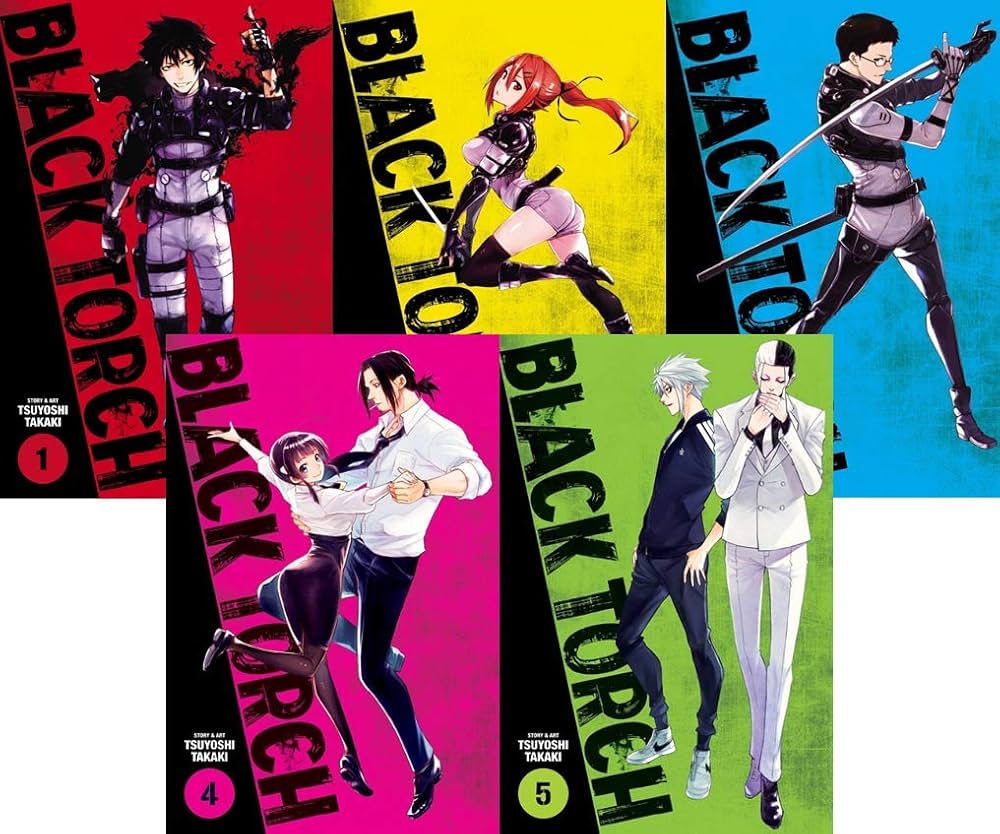
Black Torch is a Japanese manga series by Tsuyoshi Takaki, originally serialized in Jump Square and later Shōnen Jump+. It’s a concise read, compiled into just five tankōbon volumes – a stark contrast to many sprawling shonen epics. Licensed by Viz Media for English release, it falls squarely into the Action, Science Fiction, and Supernatural genres, blending themes of demons and ninjas.
The story centers on Jiro Azuma, a compassionate teenager with a unique gift: he can communicate with animals. He’s also a descendant of a long line of shinobi, giving him a background in martial arts. Jiro’s kind nature leads him to rescue a gravely injured black cat, who turns out to be Rago, an immortal mononoke (a powerful Japanese spirit) on the run.
Their meeting quickly turns perilous. Jiro is tragically killed defending Rago, but in a pivotal moment, Rago fuses with him, granting Jiro immense power and a second chance at life. This fusion immediately thrusts Jiro into a hidden war against menacing spirits. Soon after, Jiro and Rago are taken in by the Bureau of Espionage, a secret government unit dedicated to combating these supernatural threats. They join the titular “Black Torch” team, alongside the cold Ichika Kishimojin and the conflicted ninja Reiji Kirihara, to investigate and stop the rising tide of hostile mononoke.
Why Black Torch Shines: The Strengths of Tsuyoshi Takaki’s Work
Despite its brevity, Black Torch truly excels in several key areas:
- The Dynamic Duo: Jiro and Rago’s Chemistry. This is, without a doubt, the series’ strongest point. Their “banter-y dynamic” is consistently praised, often described as a “traditional buddy-cop dynamic”. Jiro’s impulsive, hot-headed nature perfectly contrasts with Rago’s self-serving, often astonished demeanor. Their witty exchanges punctuate even the most intense fights, adding a fun, silly touch that breaks the dark mood. Their evolving bond is the emotional core that keeps you invested.
- Stunning Art & Action Sequences. Tsuyoshi Takaki’s art style is almost universally lauded. It’s “gorgeous” , “stunning” , and reaches “its very best” by the final volume. Critics note its resemblance to Tite Kubo’s (Bleach) art, praising its ability to enhance combat scenes without being an imitation. Every “smack, every snick, and even one’s stance is brought out with such attitude and badassery”. Jiro’s transformed power, described as “like Venom in the form of a jaguar,” leads to “awe-inspiring techniques and attacks”. The action sequences truly “SLAP” and are “breathtaking and filled with surprises”.
- Pacing and Punch: A Concise Narrative. For some, the five-volume length is a blessing. Black Torch “cuts off the fat that usually weighs down a shonen series” and “doesn’t cave to too much exposition”. It’s “quickly paced but in a clever way” , with “not a single panel is really wasted” and “everything is plot”. This relentless focus on “the good stuff” and “guns blazing” action makes for a “high octane” and exhilarating experience. It manages to wrap up its main plot “satisfactorily” within its limited chapters, offering a complete story without a massive time commitment.
Where Black Torch Flickers: Areas for Improvement
While enjoyable, Black Torch isn’t without its flaws:
- Familiar Echoes: The Weight of Shonen Tropes. A significant criticism is its heavy reliance on established shonen tropes, drawing strong comparisons to Bleach and Naruto. The core plot device – a “normal kid gains supernatural abilities to slay demons and works for a society, ends up being demon blood” – is “literally the same thing” as Bleach. From modern character designs to secret societies and black energy powers, the similarities are striking. Some critics find the characters “incredibly boring” and the main character “as generic as you can imagine if you’ve read ANY shonen series” , suggesting a lack of unique identity.
- Untapped Potential: Character Development and World-Building. Beyond Jiro, Rago, and the main antagonist, many supporting characters lack deeper development, leaving “a lot left unresolved”. Jiro’s unique ability to talk to animals, a core part of his initial premise, goes largely “unused or developed” for much of the series. The character arc for Ichika, the female team member, is notably criticized as having “no point”.
- Missteps in Design: The Case of Fanservice. A specific and jarring criticism targets the inclusion of fanservice. Reviewers noted abrupt and seemingly gratuitous shots, like a “detailed shot of her butt” or a “ridiculous pose” with a character’s “crotch on full display” , which felt out of place and “doesn’t jive with the tone of the story”.
- The Abrupt End: A Series Cut Short. The most pervasive issue is the widespread belief that Black Torch was “clearly cut short” , ending after just 19 chapters. This led to significant pacing issues, with an excessive “seven of its 19 chapters for them to get a first mission,” and the “whole final mission is only three chapters”. This abruptness meant “any ideas were scrapped in order to focus on the main conflict” , leaving readers “bummed that this series only has five volumes” and wishing “we could have more”.
My Verdict: A Flickering Flame or a Lasting Glow?
Having read Black Torch, I’d describe it as a flickering flame—bright and enjoyable for its short run, but not one that ultimately leaves a lasting, transformative glow on the genre. It’s a fun, quick read that delivers on its action premise, but doesn’t quite transcend its influences or fully realize its broader potential.
This manga is ideal for readers who are:
- Fans of traditional shonen action: Especially those who enjoy supernatural combat and demon-slaying, drawing parallels to Bleach, Yu Yu Hakusho, or Blue Exorcist.
- Seeking a quick, self-contained story: Its concise five-volume length makes it an easy commitment for those who don’t want to invest in long-running series or prefer complete narratives without extensive filler.
- Appreciative of strong art and dynamic fight choreography: The visuals are a consistent highlight and a major draw, with detailed illustrations that enhance the intensity of combat.
- Prioritize character chemistry over intricate plot: The engaging and humorous dynamic between Jiro and Rago is a consistent major draw for readers.
The Anime’s Potential: A Chance to Shine
The recent announcement of an anime adaptation for Black Torch is incredibly exciting! This could be a significant opportunity to address some of the manga’s weaknesses. An animation studio has the creative freedom to adjust pacing, flesh out brief character moments, or even slightly expand on world-building elements that were condensed in the manga due to its premature end. This offers a chance for Black Torch to achieve the broader success and deeper impact that its strong visual foundation and core concept hinted at but couldn’t fully deliver in its original manga form.


